
-
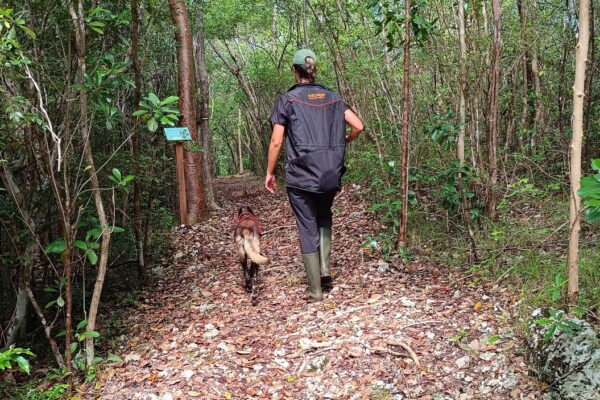
A detection dog supporting research: a new step for the CIMBA project
As part of its projects, Caribaea Initiative develops innovative approaches to improve data collection. Among these, the use of a detection dog makes it possible to locate cat scats in the field. After several months of training, this method is now operational.
Continue reading -

DEVIMTOR Project: Monitoring invasive turtles in the Caribbean continues
Whether introduced intentionally or accidentally, invasive alien species are today among the main threats to global biodiversity. In the French Caribbean, several species of freshwater turtles introduced over time have successfully established themselves in natural environments, sometimes to the detriment of native species. Understanding their distribution and impact is therefore essential to implement effective management […]
Continue reading -
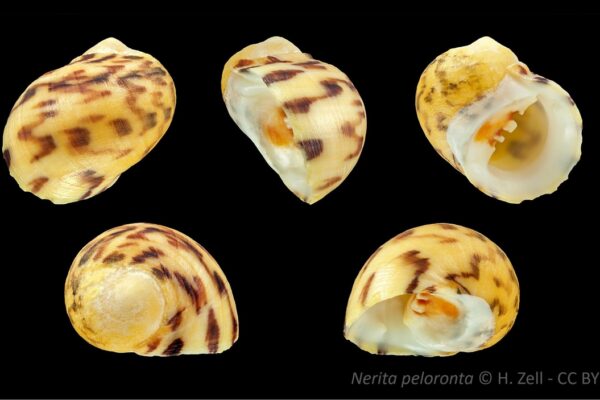
A marine parasite discovered in sea snails in Saint Kitts
Caribbean biodiversity is not limited to brightly colored birds or tropical fish. It also includes a multitude of microscopic organisms, such as parasites, whose study is just as important from both an ecological and an economic perspective.
Continue reading -

Soundscapes reveal new clues about a Critically Endangered Cuban frog
What if listening to the forest could help us protect its most elusive inhabitants? In Cuba, a tiny frog with a very restricted range—Eleutherodactylus bartonsmithi—has become the focus of an innovative conservation study based on sound.
Continue reading -
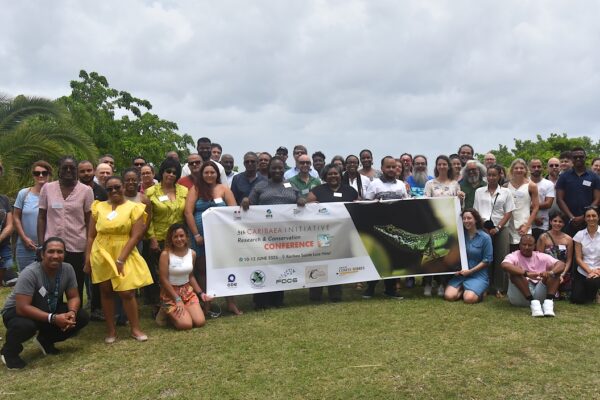
Caribbean biodiversity in the spotlight in Martinique: highlights from the 5th Caribaea Initiative scientific conference
The Caribaea Initiative Research & Conservation Conference, held from June 10 to 12, 2025, in Martinique, brought together researchers, professionals, and conservation stakeholders from across the Caribbean and beyond. The event held special significance as it coincided with the 10th anniversary of the association.
Continue reading -

Caribaea Initiative awarded at the Stars of Europe ceremony in Guadeloupe
It is an honour and a great reward for Caribaea Initiative! Our MERCI project (Managing Exotic Reptiles on Caribbean Islands) won first prize in the Interregional Cooperation category of the Les Étoiles de l’Europe en Guadeloupe competition, during the ceremony held on May 16, 2025, in Baie Mahault.
Continue reading -
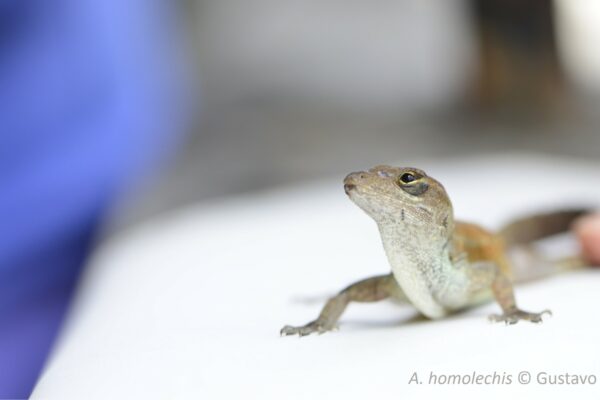
Urban and forest lizards in Cuba: Shedding new light on their differences
How does urbanization affect wildlife? In Cuba, the endemic lizard Anolis homolechis has become a model species for a team of researchers exploring various hypotheses to explain the differences observed between suburban and forest populations. A recent study offers new insights.
Continue reading -
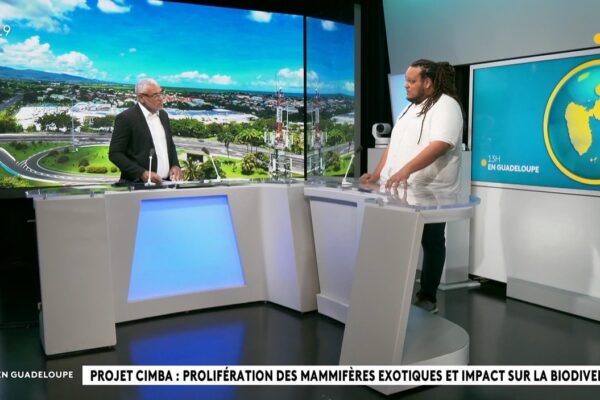
CIMBA project: A successful launch event in Guadeloupe
To mark the recent launch of our CIMBA project, an official kick-off event was held on Monday, February 17, at the Caribaea Initiative headquarters in Guadeloupe. This event brought together the press and numerous stakeholders committed to biodiversity conservation, demonstrating the strong interest in this ambitious initiative.
Continue reading -
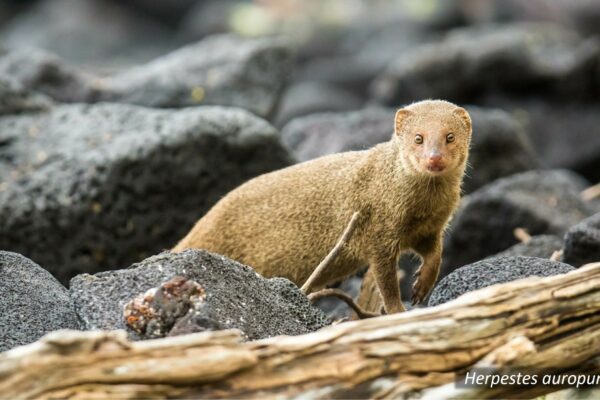
CIMBA: an innovative project to study and control exotic predatory mammals
The Caribaea Initiative association, dedicated to combating invasive alien species for years, has just launched its most ambitious project to date: CIMBA. This project aims to better understand and control the impact of exotic mammals on Caribbean biodiversity, a significant threat that requires a multidisciplinary approach combining research, action, and awareness.
Continue reading -
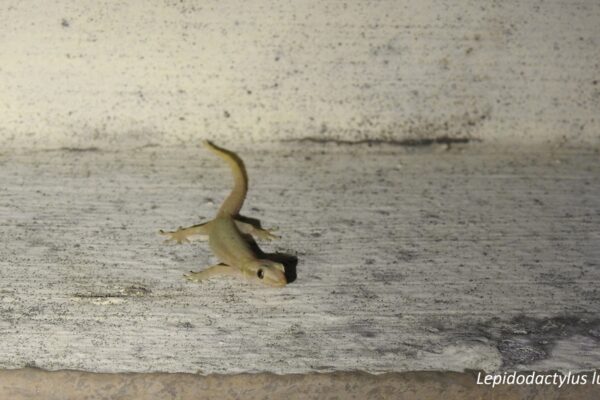
The Mourning Gecko: A rapidly spreading invasive species in Guadeloupe
In Guadeloupe, the Mourning Gecko was first detected in 2010. Thanks to its unique reproductive method and its ability to adapt to a wide variety of habitats, this reptile is able to rapidly expand into the territories it colonizes. A recently published study highlights the current status of this invasion.
Continue reading